If your air conditioner isn’t cooling like it used to, a dirty fan could be the culprit. Regular upkeep of your AC’s blower fan is key for peak performance. Our guide will show you simple maintenance steps to keep you cool all summer.
Let’s get started and beat the heat!
Understanding the AC Blower Fan
Delving into the intricacies of your air conditioner, the AC blower fan emerges as a pivotal component that commands attention for efficient system operation. Grasping its functionality is not only intriguing but fundamental to appreciating how it propels air through your home’s ductwork.
What is an AC blower fan?
An AC blower fan is the part of your air conditioning system that propels cool or heated air into your living spaces. It sits within the HVAC unit and works tirelessly, pushing air through ductwork and past evaporator coils to maintain a comfortable indoor environment.
The blower motor drives this fan, making it a crucial component for climate control in homes and offices. Whether you’re beating the heat or warding off winter’s chill, this fan plays a key role.
Different models come with various types of blower fans, each designed to fit specific systems such as central air conditioning or individual room units. Regular maintenance is vital to keep the blower fan running efficiently; neglect could lead to increased energy bills and reduced system performance.
Cleaning and replacing components like filters are common tasks needed to ensure an AC blower fan operates at its peak, circulating fresh air throughout your space effectively.
Types of blower fans
Centrifugal blowers are common in various HVAC systems. They use an impeller to increase the speed of air which then exits at a 90-degree angle. The design is similar to that of centrifugal pumps, making them highly efficient for moving air in a directed flow pattern.
These blowers work well in situations where there’s a need for rapid air exchange, such as in air conditioners and heaters.
Another main type is the positive-displacement blower. It traps pockets of air and pushes these volumes out against the system pressure, which is ideal for applications requiring steady airflow rates despite changes in the system pressure.
Tube-axial and propeller fans can also be categorised within blower types, each with unique blade designs suited to specific tasks like cooling electronic equipment or providing ventilation within confined spaces.
Each make and model may incorporate one of these fan types depending on its intended use and performance requirements.
The working principle of a blower wheel
A blower wheel sits at the heart of an air conditioning system, its blades meticulously designed to pull in air and then push it out with force. The motor powers up, initiating a spin that sets the fan blades into rapid motion.
This action generates a centrifugal force that effectively moves large volumes of air through the air-handling units. As it spins, the wheel draws in air from one side and accelerates it outward from the centre using centrifugal action within its slanted or curved blades.
This clever design ensures that your space receives a steady stream of cool, refreshing airflow during those warm days. Just like windmills harness wind power, blower wheels capture ambient air and amplify its movement efficiently throughout indoor environments.
Their constant rotation plays an essential role in maintaining comfortable temperatures and aiding indoor air quality by working seamlessly with other components such as heat exchangers and filters inside your AC unit.
Significance of Maintaining the Blower Fan
Maintaining the blower fan of your air conditioning unit is a vital practice that not only extends the lifespan of your system but also guarantees peak performance through sweltering seasons.
Regular attention to this essential component wards off unexpected breakdowns and ensures that comfort remains uninterrupted in every corner of your home or office.
Ensuring proper airflow
Ensuring your air conditioning unit has proper airflow is a key step in maintaining its performance. Clean air filters are central to this process; they enable the smooth passage of air into your home, ensuring that the cooling effect is evenly distributed throughout.
Dirty or clogged filters can obstruct airflow, forcing your system to work harder and possibly leading to higher energy bills and less effective cooling.
To maintain optimal airflow, check and clean the air filters regularly. A vacuum cleaner can help remove dust build-up on both indoor and outdoor unit components. Remember that blocked vents or ducts can also disrupt airflow, so keep furniture and drapes clear of vent openings.
In addition, make sure the area around your outdoor unit is free from debris that could hinder performance—this includes leaves, dirt, and even snow during winter months. Keeping these areas unblocked supports the efficient operation of centrifugal fans within the system by allowing them to increase airstream velocity effectively for improved overall fan system performance.
Preventing energy waste
Regular checks and maintenance of your aircon’s blower fan can significantly reduce energy consumption. This proactive approach stops the system from overworking due to clogged filters or blocked airways, reducing energy wastage.
Proper airflow ensures the air conditioning unit doesn’t strain to cool your space, saving electricity costs.
Keeping the blower fan in top condition also means less effort for the motor to circulate air through your home. A well-maintained fan operates smoothly, requires less power, and prevents unnecessary hikes in your energy bills.
Servicing includes tasks like cleaning or replacing filters, vacuuming out dust from the unit, and checking components like the condenser coil for any issues—all aimed at promoting efficient operation and slashing excess energy use.
Improving air quality
Maintaining your AC’s blower fan not only ensures efficient performance but also plays a critical role in enhancing indoor air quality. Dirty fans can spread dust and allergens throughout your home, aggravating respiratory issues.
Clean filters and fans work together to filter out pollutants, stopping them from circulating in the air you breathe.
Exhaust fans are key allies in this battle against poor air quality. They help lower humidity levels that could otherwise encourage mould growth in your space. Regularly using these fans significantly reduces fungal proliferation, contributing to cleaner and healthier indoor environments.
Strategies for a More Efficient Air Conditioner
Maximise your air conditioner’s efficiency by ensuring it is properly installed. A well-installed AC operates more effectively and prevents unnecessary strain that can lead to energy waste.
Regularly service your unit, focusing on tasks such as cleaning or replacing the filters according to the recommended cleaning frequency. This simple step can significantly boost performance and reduce pressure on the system.
Incorporate technology like a smart thermostat to optimise heating and cooling schedules, tailoring them to your daily routines for maximum effect. They enable precise control over indoor climate while reducing energy consumption when you’re away from home or asleep.
Keep an eye out for any strange noises or reduced airflow which may indicate issues with your air handler or other system components; addressing these early can save energy and money in the long run.
Guide to Cleaning an AC Blower Fan
Maintaining the cleanliness of your AC’s blower fan is instrumental in keeping your air-conditioning system running smoothly and efficiently. Our guide offers a straightforward approach to this often-overlooked aspect of aircon care, ensuring you can easily enhance your unit’s performance.
Step-by-step guide
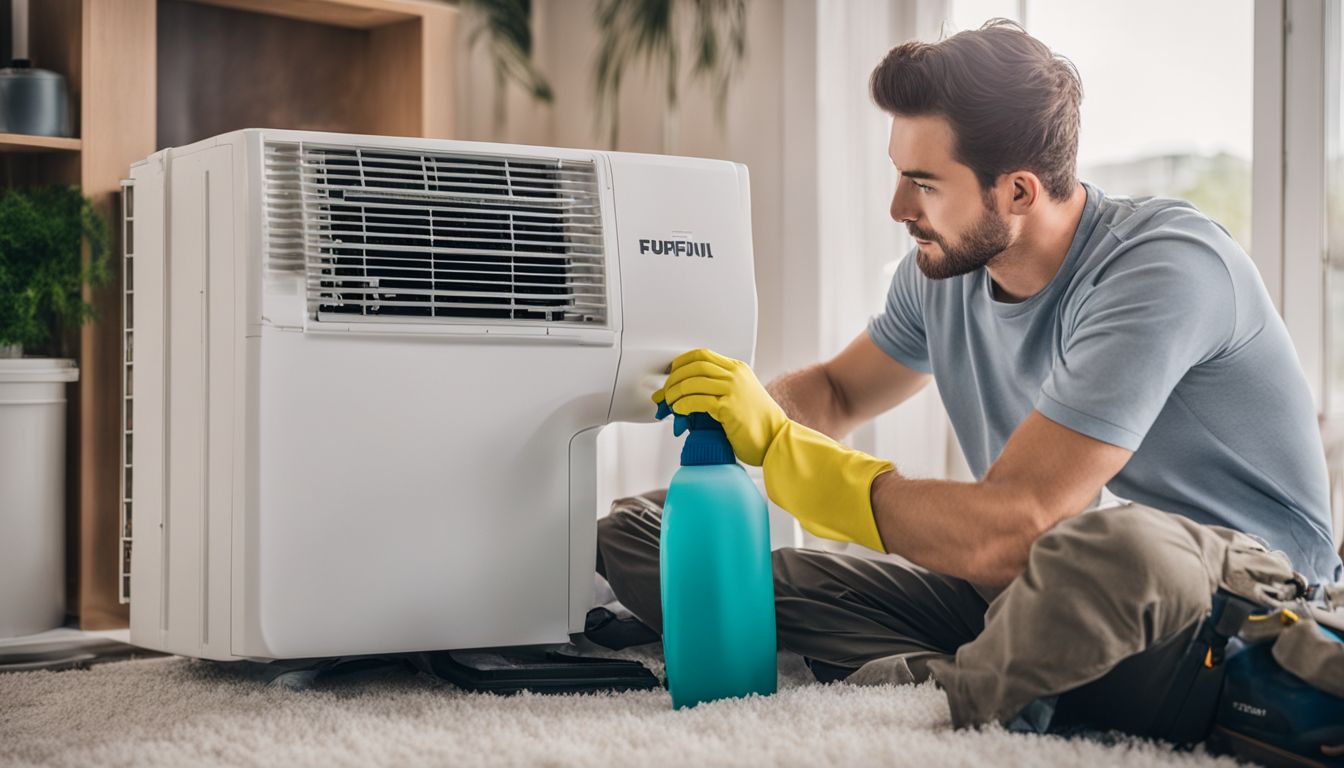
Begin by turning off your air-conditioning system to ensure safety during cleaning. Remove the cover of the blower/furnace unit, taking care not to damage any wires or components. Inspect the blower wheel and use a soft brush to gently remove any dust, pet hair, or dirt that is clogging it.
It’s important for efficient operation and reduces energy consumption.
Pull out the air filter and inspect it for buildup—replace if necessary since a clean filter supports good airflow and improves air quality. For deeper cleaning, apply a mild detergent solution to a cloth and carefully wipe down the evaporator coil; avoid bending delicate fins that help your AC run smoothly.
Vacuum inside the compartment where possible, targeting loose debris without disrupting wiring or smaller parts of your air-conditioning system. Once all components are clean and dry, reassemble everything you’ve taken apart.
Lastly, check outdoor units as well—clear away leaves or lint from around the heat pump or condenser to prevent blockages that impair function. This checklist ensures proper maintenance of air purifiers within HVAC systems like yours at home.
Recommended cleaning frequency
To keep your air conditioner’s blower fan in tip-top shape, mark your calendar for a thorough cleaning at least once yearly. This routine maintenance is crucial to maintain efficient operation and ensure the air you breathe is clean.
If your home or surroundings are particularly dusty, consider increasing this frequency. Regularly removing dirt and debris from the blower wheel and ductwork prevents blockages that can hamper airflow and degrade air quality.
As part of keeping your AC unit healthy, don’t overlook the importance of the air filter. Swap out the old filter for a new one twice yearly; doing so is essential for preventing pollutants from circulating through your living space.
Households in dustier areas might need to change their filters more often to combat the additional airborne particles. Maintenance tasks like these also help curb energy consumption since clean systems run more efficiently than dirty ones, saving you money on bills related to air-conditioned comfort.
Troubleshooting Common Blower Fan Problems
When your AC’s blower fan encounters issues, it can lead to discomfort and inefficiency in your home. Addressing problems such as diminished airflow, complete lack of air movement, unusual overheating or a spike in energy bills is crucial for restoring function and maintaining the longevity of your unit.
Weak airflow
Weak airflow from your air-conditioner can signal a problem with the blower motor. It often suggests that something is blocking the fan or it might be turning too slowly. Dirt and debris build-up are common culprits, making regular air filter cleaning essential for maintaining strong airflow.
Additionally, inspecting settings on your unit could reveal if the fan speed needs adjustment.
A sluggish fan not only affects comfort but also strains the system, leading to higher energy bills and possible damage to other components like the compressor or expansion valve. If you’ve cleaned everything and checked for blockages but still face weak airflow, consider calling in a professional.
They can assess whether poor fan selection is causing noise and vibrations or if there are deeper issues with your HVAC system that require expert attention.
No airflow
If you switch on your air-conditioner and find there’s no airflow, this could mean a serious problem with the blower motor. Without a working blower motor, the AC unit can’t circulate air through your home, effectively making it useless.
The fan in the outdoor unit might spin, but without that crucial component pushing air into rooms, not even a whisper of cool breeze will emerge from the vents.
An immediate check of the AC system is vital to confirm if the issue lies with a malfunctioning blower motor or another part like filters or ducts. Sometimes debris accumulates in the pathway or components wear out over time.
Regular maintenance ensures these parts remain clean and functional to prevent sudden failures that halt airflow completely. Keep an eye on signs like unusual sounds or weak airflow before complete stoppage; these often signal impending problems with air-conditioners and related systems such as refrigerators, dehumidifiers, clothes dryers, and washers – all of which rely on efficient fans for operation.
Overheating
Overheating in your aircon can spell trouble for the system’s health. Blower motors work overtime if they’re faulty or straining against other issues, which leads to increased heat production.
Failing to rectify this promptly might cause the internal thermal limit switch to activate, shutting down the motor to prevent damage.
Regular checks and maintenance are crucial for preventing overheating. Ensure that refrigerant levels are adequate and that condenser units are correctly positioned. Keep all components clean from dirt build-up as it obstructs efficient airflow and contributes significantly to excessive heating of ACs’ outdoor unit maintenance. It is also a key factor in keeping operational temperatures stable, ensuring your air conditioning system’s longevity and peak performance.
High energy consumption
High energy consumption in a/c units often signals a blower fan working overtime to compensate for underlying issues. Clogged filters, accumulated dirt in the ducts, or even motor wear can force your air conditioner to draw more power.
This increases your electricity bill and puts additional strain on the system, leading to potential malfunctions and reduced lifespan.
To reduce excessive energy use, maintain your AC’s blower fan regularly. Intelligent motion controls in modern DC brushless fans optimise operation ensuring they run efficiently.
By keeping these components clean and in good repair, you prevent unnecessary energy drain and keep cooling costs under control without sacrificing comfort levels inside your home or office.
Conclusion
Keeping your aircon fan clean is a simple yet crucial task for your unit’s longevity. Embrace these maintenance routines to keep cool, crisp air flowing through your space. Recognising the early signs of blower fan problems can save you time and money.
Empower yourself with the knowledge of basic upkeep and enjoy a more efficient and reliable air conditioner. Commit to regular care; your AC will thank you with peak performance year-round.
For more tips on optimising your aircon’s efficiency, read our detailed guide on strategies for a more efficient air conditioner.
FAQs
1. Why do I need to maintain my aircon fan?
Regular maintenance keeps your aircon fan running smoothly and efficiently.
2. How often should I clean my aircon fan?
You should clean your aircon fan blades at least once every three months to prevent dust buildup.
3. Can I maintain the aircon fan myself?
Yes, you can perform basic cleaning and checks on your aircon fan yourself, but always ensure the power is off before doing so.
4. What tools do I need to maintain an aircon fan?
A screwdriver and soft cloth are typically enough for basic fan maintenance tasks like cleaning.
5. When should I call a professional for aircon fan maintenance?
Call a professional if the fan makes unusual noises or doesn’t work after routine cleaning.